Have you ever wondered how going green can transform your business? Embracing sustainability isn’t just an ethical choice; it’s a strategic one that can reduce costs, boost efficiency, and strengthen your brand’s appeal among today’s eco-conscious consumers. Additionally, sustainability drives innovation, leading to new opportunities and solutions that keep your business ahead of the curve.
A Sustainability Success Story: Kathmandu Guest House
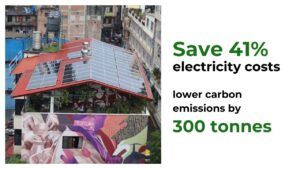
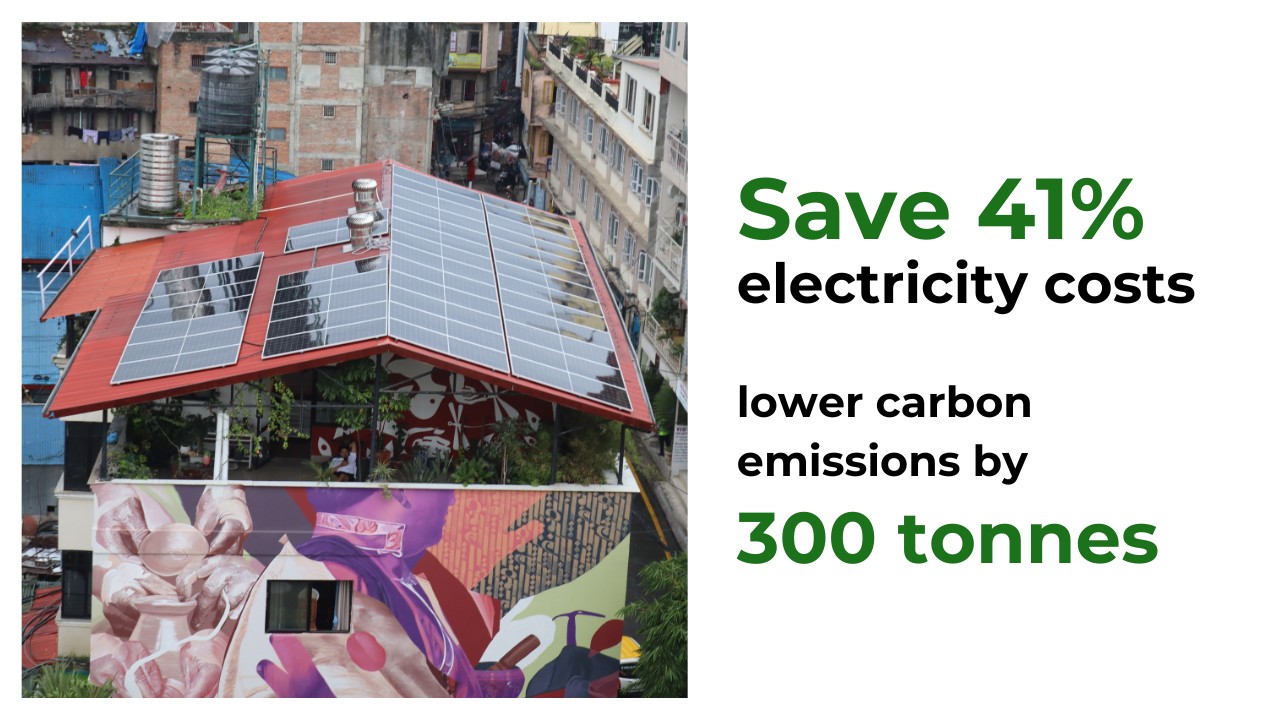
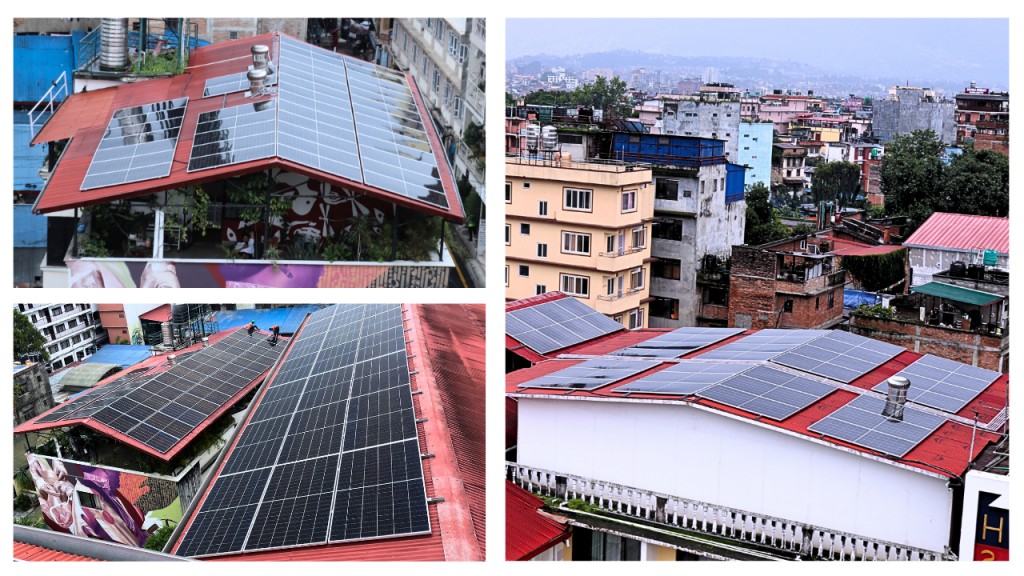
One Nepali business leading the way in sustainability is Kathmandu Guest House (KGH), an iconic establishment located in the vibrant Thamel area of Kathmandu. Known for its artistic ambiance and dedication to environmental responsibility, KGH has recently elevated its green initiatives with the installation of a 105.6 kW rooftop solar system in collaboration with Gham Power. This bold step reflects KGH’s commitment to sustainability and sets an inspiring example for the hospitality industry.
From Diesel to Solar: A Greener Path
Before installing solar, KGH heavily relied on diesel generators as a backup alongside the NEA grid to power the hotel. While effective, this dependence on diesel not only escalated operational costs but also contributed significantly to carbon emissions, amplifying the hotel’s environmental footprint. Recognizing the need for a greener approach, KGH shifted its focus towards a cleaner and more sustainable source by adopting solar energy.
“Seeking environmentally friendly solutions is not a special accomplishment anymore. It should be made mandatory for all businesses.”, says Shaguni Singh Sakya, Executive Director of Kathmandu Guest House by KGH Group. “Kathmandu Guest House is committed to attain the highest standards of environment sustainability through the use of clean green energy, its conservation and efficient use.”
The decision to go solar significantly reduced KGH’s electricity bills, minimized their reliance on diesel generators and contributed to the fight against climate change. Over the next 25 years, KGH will cut out 59 kiloliters of diesel and lower carbon emissions by 300 tonnes. This green shift will also save 41% on electricity costs, showcasing how sustainable energy can lead to both environmental and financial benefits. Moreover, the operation of solar systems can be monitored online at any time of the day, allowing for immediate fault resolution, and ensuring a more efficient and sustainable operation.
Long-Term Impact: A Model for Nepali Businesses
KGH’s solar journey stands as a pioneering example for other Nepali businesses considering sustainable energy solutions. The projected savings, environmental benefits, and operational efficiencies highlight how investing in green energy is not only feasible but also beneficial for businesses in Nepal and beyond. KGH’s shift to solar power demonstrates that adopting renewable energy is an investment in resilience and sustainability.
We extend our heartfelt thank you and gratitude to the Nepal Renewable Energy Programme (NREP), the Foreign, Commonwealth & Development Office (FCDO), and the Alternative Energy Promotion Centre (AEPC) for their invaluable support in this project.
Contributed by – Aakriti Timilsena, Marketing Assistant