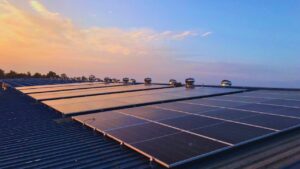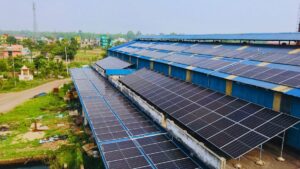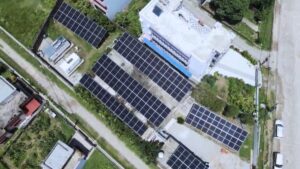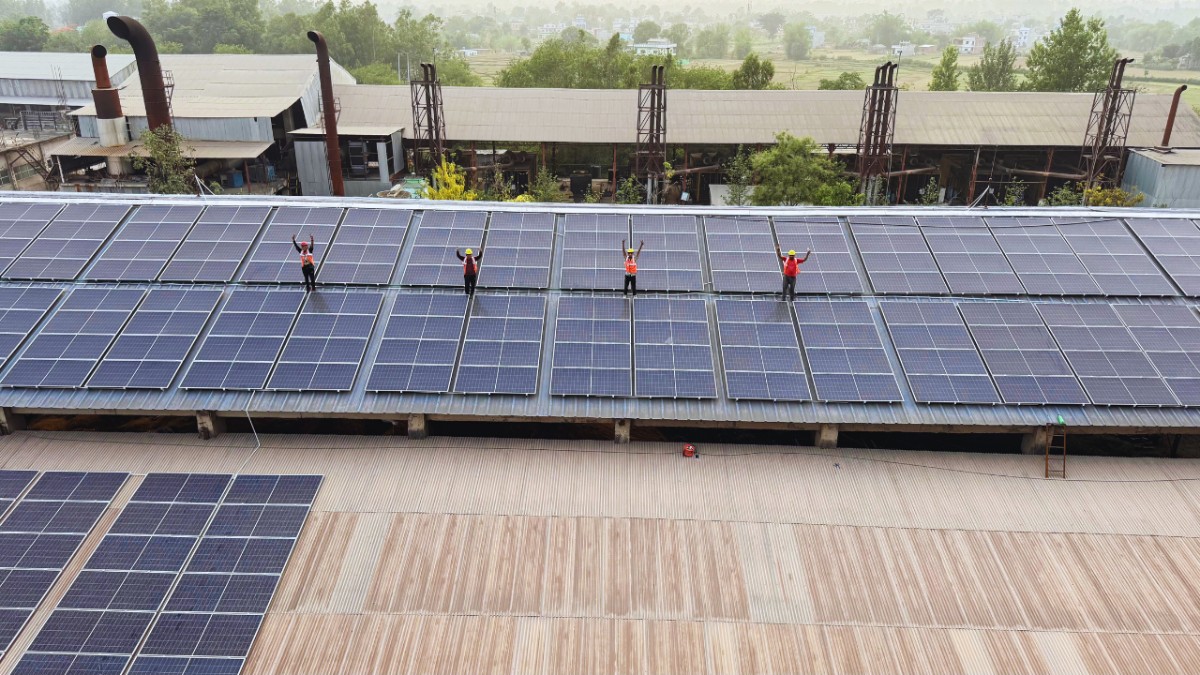
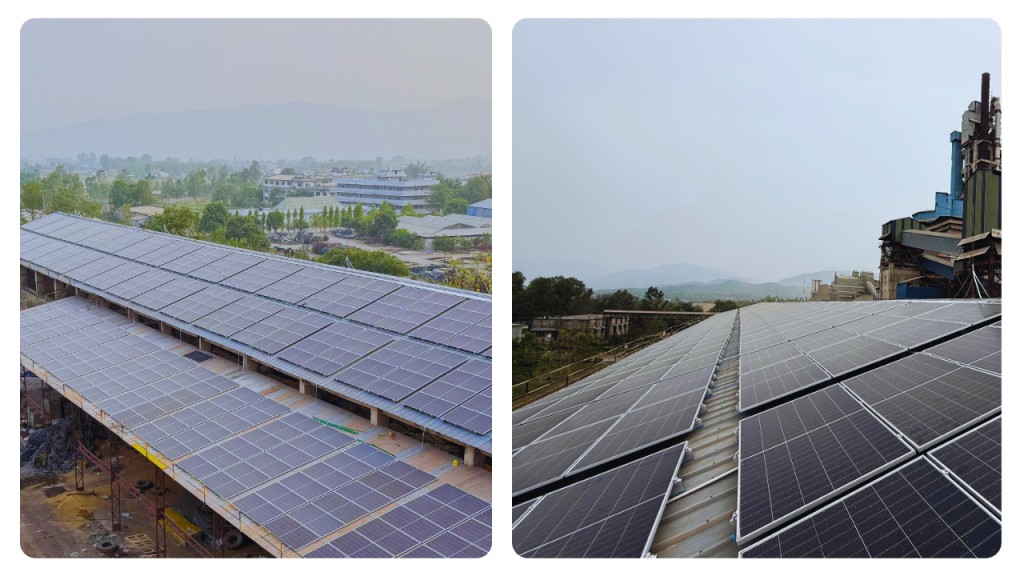
Ghorahi Cement, a leading name in Nepal’s industrial sector, has taken a significant step toward sustainability by installing a 658.8 kWp solar power system at its factory in Ghorahi, Dang. This step marks the company’s move toward cleaner energy and long-term efficiency.
Tackling High Costs and Energy Instability
Recently, the factory relied heavily on the NEA grid and diesel generators to meet its energy needs. This dependence brought several challenges:
- High electricity costs from the grid and diesel usage
- Frequent voltage fluctuations that disrupted production
- Overheated roof sheets made working conditions difficult for employees
These issues not only increased operational expenses but also affected overall productivity. Therefore, the transition to solar became both a necessary and transformative solution.
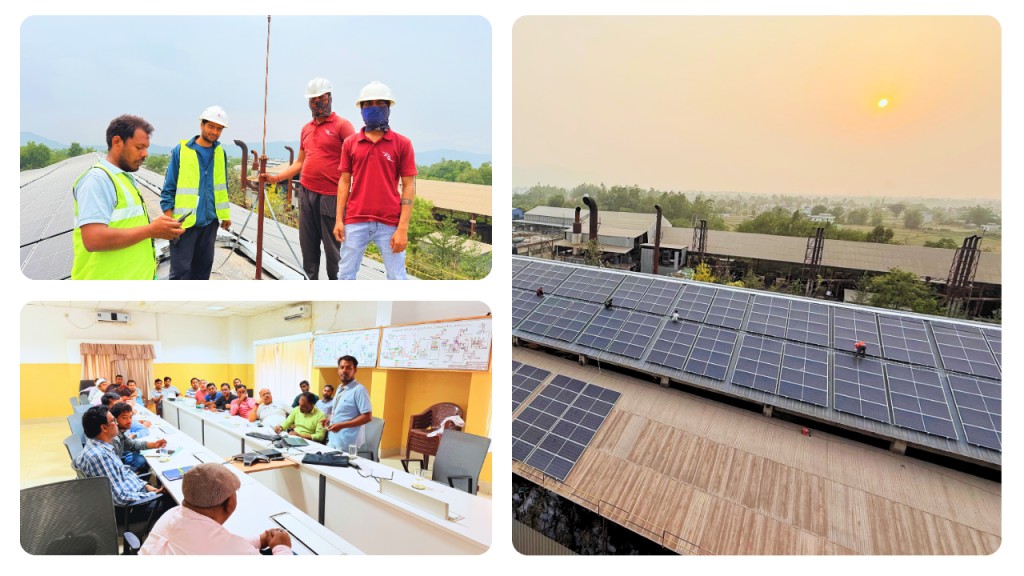
Installing Solar Amid Heat and Dust
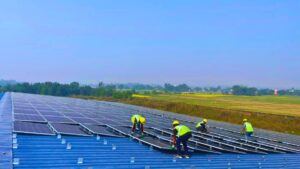
The solar installation was not without challenges. The team had to work in cement and gypsum dust, endure the scorching heat of Dang, and put in extra effort to set up the powerhouse. Despite these difficulties, the 658.8 kWp solar system was completed successfully within three months, thanks to the dedication and hard work of the installation team.
Immediate and Long-term Benefits of Solar
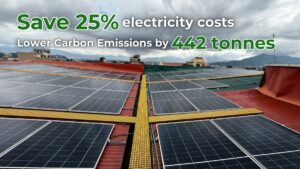
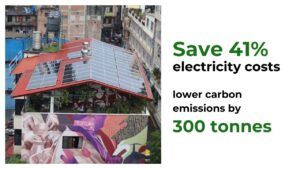
Today, the solar system is already helping Ghorahi Cement in reducing electricity costs. Beyond the financial benefits, the shift has strengthened the company’s reputation as a sustainability-focused industry leader while improving power quality across the factory. Additionally, the reduced heat from the roofs has created a more comfortable working environment for staff, showing how renewable energy can improve both efficiency and working environment.
In the long run, the solar installation is expected to displace 235 kiloliters of diesel and reduce around 1,560 tonnes of carbon emissions over 25 years, contributing to Nepal’s national goal of advancing clean and renewable energy.
Paving the Path for Sustainable Industrial Growth in Nepal
By embracing solar energy, Ghorahi Cement has not only secured a reliable and cost-effective power source but also set an inspiring example for other industries in Nepal. This project proves that sustainable energy can power both industrial growth and a greener future.
Contributed by – Aakriti Timilsena, Marketing Assistant